EV Charging: What to Look At Before You Buy
Off-street parking is only half the question - consents, electrical capacity and what your street allows matter just as much
Around 40% of UK households have no driveway, and for a growing number of buyers that has quietly become a question about the property rather than about the car. It is also one of the few things that almost never appears on a listing, does not show up in a survey, and only surfaces when someone has already fallen for the house. Here is what the question actually breaks down into, and where the answers come from.
Off-street parking is the first question, not the only one
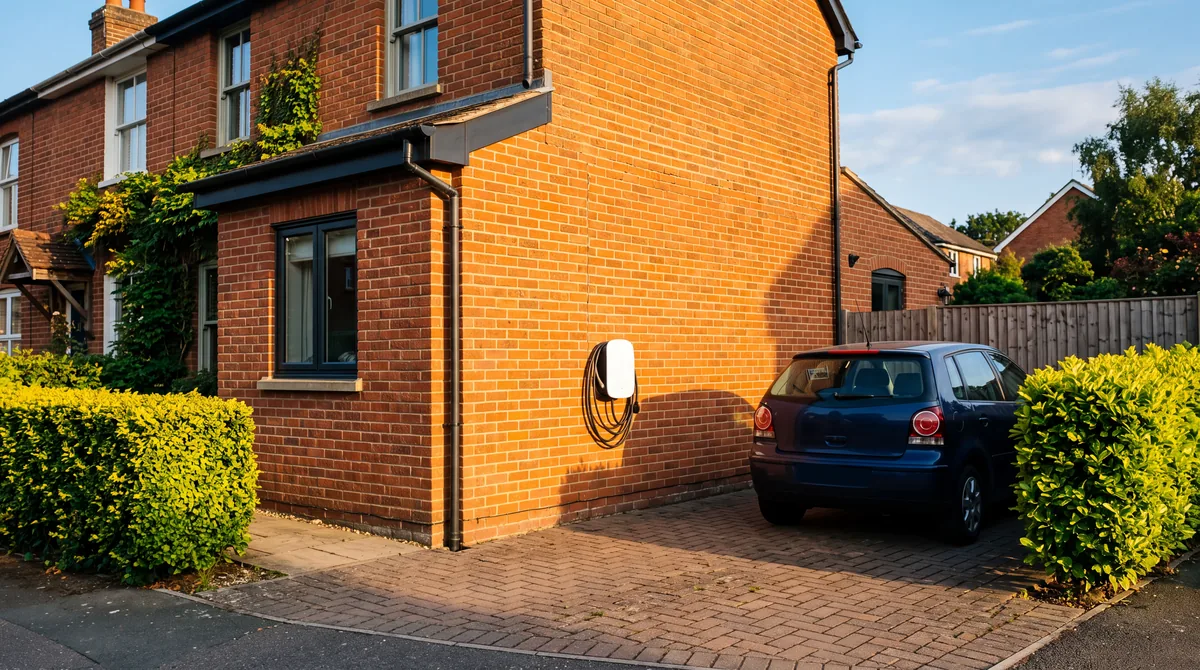
A driveway or allocated space makes a home chargepoint straightforward in most cases. It is also the condition attached to the government grant schemes: private off-street parking is required.
But a driveway on its own does not settle it. The property still needs the electrical capacity, and depending on the tenure it may need someone else's permission. Those three things - parking, power, permission - are separate questions, and a property can pass one and fail another.
- Parking, electrical capacity and consent are three separate questions
- A driveway does not guarantee a chargepoint can be installed
- None of this appears on a standard listing
Leasehold, shared driveways and managing agents
This is where it gets complicated, and where a conveyancer earns their fee.
If the property is leasehold, or the parking is communal, or the driveway is shared, installing a chargepoint typically needs consent from the freeholder, management company or managing agent. Where the parking space is demised to the flat, the position differs from where it is communal land the leaseholder simply has a right to use.
Recent reform in this area has shifted the burden, so that a landlord refusing consent is generally expected to show the refusal is reasonable rather than simply decline. Limited electrical capacity, where upgrading the supply would be disproportionately expensive, is one of the grounds that comes up.
What any of this means for a specific property depends on the lease, the title and the management arrangements - which is a question for the conveyancer reviewing them, not for a general guide.
- Leasehold and shared parking generally need third-party consent
- Consent is normally needed before applying for a grant, not after
- The lease and title are what determine the position, so raise it with your conveyancer early
No driveway? Cross-pavement channels have moved fast
For the 40% of homes without off-street parking, running a cable across a public footway is not permitted, for obvious reasons. The alternative that has grown quickly is the cross-pavement channel: a shallow, self-closing gully set into the footway so a cable can run from the house to a car at the kerb without being a trip hazard.
As of 2026 these have gone from trial to fairly widespread. Roughly 42% of UK councils expect to offer them by the end of the year - a handful already live, a larger number in trial, and more planning a rollout.
Two things worth knowing. Provision is inconsistent: whether your street qualifies depends entirely on the local authority. And so is cost - some councils install them free, others charge upwards of a thousand pounds. The relevant council's website is the only reliable source for a given address.
The reason people go to the trouble is the running cost difference: domestic electricity tariffs are typically several times cheaper than public rapid charging.
- Trailing a cable across a public pavement is not an option
- Cross-pavement channel availability and cost vary widely between councils
- The local authority's website is the place to check for a specific street
Electrical capacity, and why it is not a survey question
A chargepoint adds a significant continuous load. Whether a property can take it depends on the incoming supply, the consumer unit, and in some cases whether the distribution network operator needs to be notified or the supply upgraded.
A RICS Level 2 or Level 3 survey does not answer this. Surveys look at condition, not at whether a specific future installation is feasible. An electrician or an approved installer is the person who assesses it, usually with a site survey before quoting.
Older properties, flats, and homes with a shared supply are where capacity questions come up most often.
Grants, as they stand in August 2026
There are two schemes that come up repeatedly, and both change periodically. A chargepoint grant for renters and flat owner-occupiers covers 75% of purchase and installation up to a £500 cap per socket. A residential landlord grant rose to £500 per socket in April 2026, from £350.
Both require private off-street parking, an eligible vehicle, and installation by an OZEV-registered installer. Any third-party permission - landlord, freeholder, managing agent - has to be in place before applying.
One point that surprises tenants: where a landlord funds or consents to the installation, the chargepoint typically belongs to the property rather than the occupier, and stays behind on a move.
Amounts, caps and eligibility in this area are revised regularly. The GOV.UK grant pages are the authoritative source on the day you are looking.
- Grant terms change - check GOV.UK rather than a third-party summary
- Off-street parking is a condition of the current residential schemes
- An installed chargepoint usually stays with the property
Questions that fit naturally into a viewing
Whether there is an existing chargepoint, and if so who installed it and when. Whether the parking is demised, shared or communal, and who manages it. Where the consumer unit is and how old it looks. Whether neighbours on the street have chargepoints or cross-pavement channels. What the council's position is on that street.
Our viewing checklist covers the rest of what is worth attention on a first visit.
Key takeaways
- 1Parking, electrical capacity and consent are three separate questions, and a property can pass one and fail another
- 2Leasehold, shared or communal parking usually needs freeholder or managing agent consent, and consent is needed before a grant application
- 3Around 40% of UK homes have no driveway; cross-pavement channels are the growing alternative, with roughly 42% of councils expecting to offer them by the end of 2026
- 4Council provision and cost vary widely, so the local authority is the only reliable source for a given street
- 5A survey speaks to condition and will not tell you whether a chargepoint can be installed - an electrician or approved installer assesses that
- 6Grant caps stand at £500 per socket under the current residential schemes, and terms are revised regularly. Last reviewed August 2026
General information only. This article is for educational purposes and does not constitute legal, financial, surveying or tax advice. Every property purchase is different - always consult a qualified solicitor, mortgage adviser or surveyor before making decisions. Home Ready Guide Limited is not FCA authorised.
Related articles

What to Actually Look For on a Property Viewing
When we started viewing houses, we spent half the time admiring the décor. It took a few viewings (and some honest feedback from our surveyor) to realise that paint colours and garden tidiness have nothing to do with whether a house suits your needs. Here's what to actually look at - and what you may want to look at more carefully.
Read article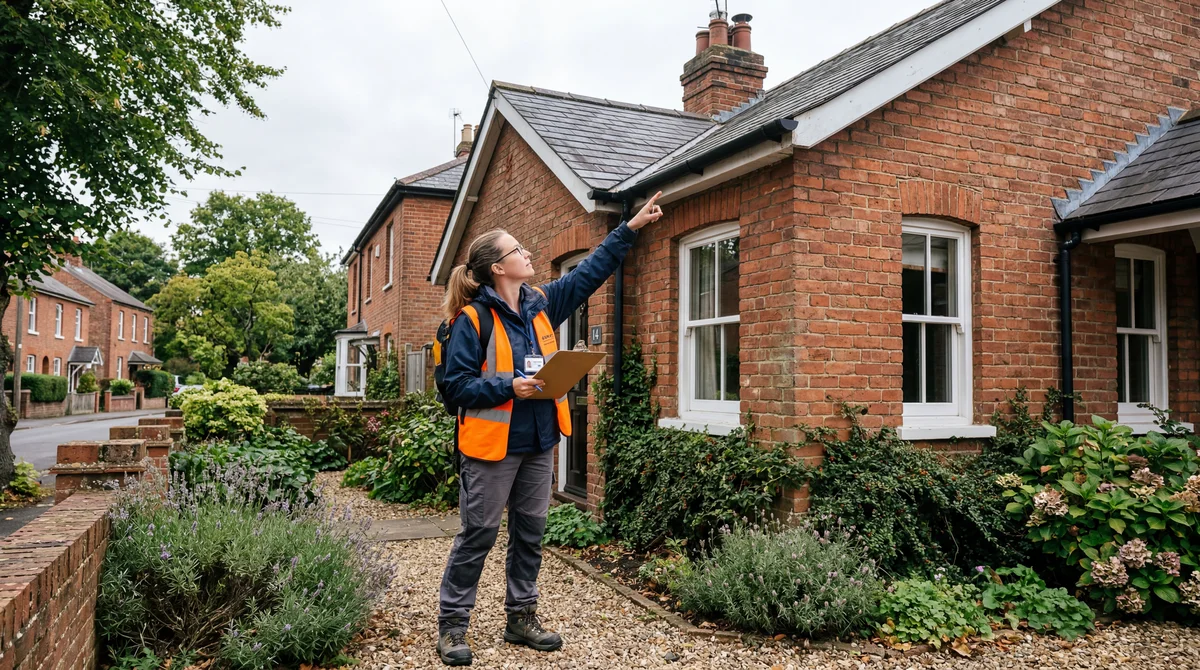
Survey types: Level 1, 2 and 3 explained
A survey is not a legal requirement in England and Wales - but skipping one is a gamble that thousands of buyers regret every year. A friend of ours bought without one and discovered subsidence six months in - a £35,000 lesson. Here's how the three levels differ and which types of property each is designed for.
Read article
Conveyancing Explained: What Your Solicitor Actually Does
For many buyers, conveyancing is the mysterious thing that 'the solicitor does' for several months in the background. We felt completely in the dark during ours - chasing updates, not understanding what stage we were at, wondering if things were on track. Understanding what's actually happening - and what your role in it is - can reduce that anxiety and help you spot delays before they become problems.
Read article