
Conveyancing Explained: What Your Solicitor Actually Does
A plain-English walk-through of the legal process from offer to completion
For many buyers, conveyancing is the mysterious thing that 'the solicitor does' for several months in the background. We felt completely in the dark during ours - chasing updates, not understanding what stage we were at, wondering if things were on track. Understanding what's actually happening - and what your role in it is - can reduce that anxiety and help you spot delays before they become problems.
What is conveyancing?
Conveyancing is the legal process of transferring ownership of a property from the seller to the buyer. In England and Wales, it typically takes 8-16 weeks from instructing your solicitor (typically done as soon as an offer is accepted) to the day you receive the keys.
You'll have your own conveyancer, and the seller will have theirs. They communicate with each other on your behalf to agree the contract and transfer.
Stage 1: Instruction and initial checks
Once you've instructed a solicitor and provided proof of identity and funds, they will receive the draft contract and title documents from the seller's solicitor. Your solicitor reviews these and raises any initial questions ('pre-contract enquiries') about the property.
- ID documents needed: passport or driving licence, and proof of address (utility bill, bank statement)
- Source of funds evidence may be required by your solicitor for anti-money laundering compliance
Stage 2: Searches
Your solicitor will apply for a bundle of searches against the property. This was the stage where our purchase seemed to stall - our local authority took nearly four weeks to return results, and nobody warned us that was normal. Don't panic if it feels slow here. These are queries raised with third-party authorities to identify any issues that don't appear on the title register:
• Local Authority Search (LLC1 + CON29): planning history, road adoption, conservation area status, enforcement notices • Environmental Search: flood risk, contamination, radon, ground stability • Water & Drainage: connection to mains water and public sewer • Optional: coal mining (if in a mining area), chancel repair, highways searches
Searches typically take 1-4 weeks depending on the local authority.
Stage 3: Mortgage offer and enquiries
While searches are being processed, your mortgage application should be moving through lender underwriting. The lender will need to issue a formal mortgage offer before exchange can happen.
Simultaneously, your solicitor will raise additional enquiries with the seller's solicitor - detailed questions arising from the search results, the title documents, and the Property Information Form (TA6) and Fittings and Contents Form (TA10) completed by the seller.
Stage 4: Exchange of contracts
Exchange is the legal point of commitment. Both parties sign identical contracts, and these are exchanged (usually over the telephone between the two solicitors). A completion date is agreed and locked in.
At exchange, you pay your deposit - typically 10% of the purchase price - which is held by the seller's solicitor. If you withdraw after exchange, you lose your deposit. If the seller withdraws, they may be liable to pay you compensation.
- Exchange and completion can happen on the same day (unusual, but possible in chain-free sales)
- Exchange and completion are typically 1-2 weeks apart - though same-day and longer gaps both happen
- Most buyers book their removal company provisionally before exchange
Stage 5: Completion
On completion day, your mortgage funds are released by your lender to your solicitor, who sends the full purchase price to the seller's solicitor. Once the seller's solicitor confirms receipt, your estate agent releases the keys.
After completion, your solicitor pays SDLT to HMRC, registers your ownership with the Land Registry, and sends you the title deeds (usually a digital document now) confirming you own the property.
Key takeaways
- 1Conveyancing typically takes 8-16 weeks from offer to completion
- 2Searches are legal enquiries - not surveys - raised against the property with third parties
- 3Exchange is the legal commitment: you lose your deposit if you withdraw after this
- 4Completion is when money transfers and keys are released
- 5Your solicitor handles SDLT payment and Land Registry registration after completion
General information only. This article is for educational purposes and does not constitute legal, financial, surveying or tax advice. Every property purchase is different - always consult a qualified solicitor, mortgage adviser or surveyor before making decisions. Home Ready Guide Limited is not FCA authorised.
Related articles
Conveyancing searches explained
This guide describes the main conveyancing searches used in residential purchases in England and Wales after an offer is accepted. It covers the conveyancing stage of a typical residential purchase.
Read articleLeasehold reform explained
This guide describes what leasehold means and which England and Wales leasehold reforms are already in force or still prospective as of September 2026. It covers leasehold tenure issues that commonly arise at conveyancing or after an offer is accepted.
Read article
Survey types: Level 1, 2 and 3 explained
A survey is not a legal requirement in England and Wales - but skipping one is a gamble that thousands of buyers regret every year. A friend of ours bought without one and discovered subsidence six months in - a £35,000 lesson. Here's how the three levels differ and which types of property each is designed for.
Read article
7 Mistakes First-Time Buyers Make (and How to Avoid Them)
Buying your first home is exciting, and it's also the point at which you're most vulnerable to making expensive mistakes. We made at least three of these ourselves - and built this guide so you don't have to. Here are the seven most common ones - and what many buyers do differently.
Read article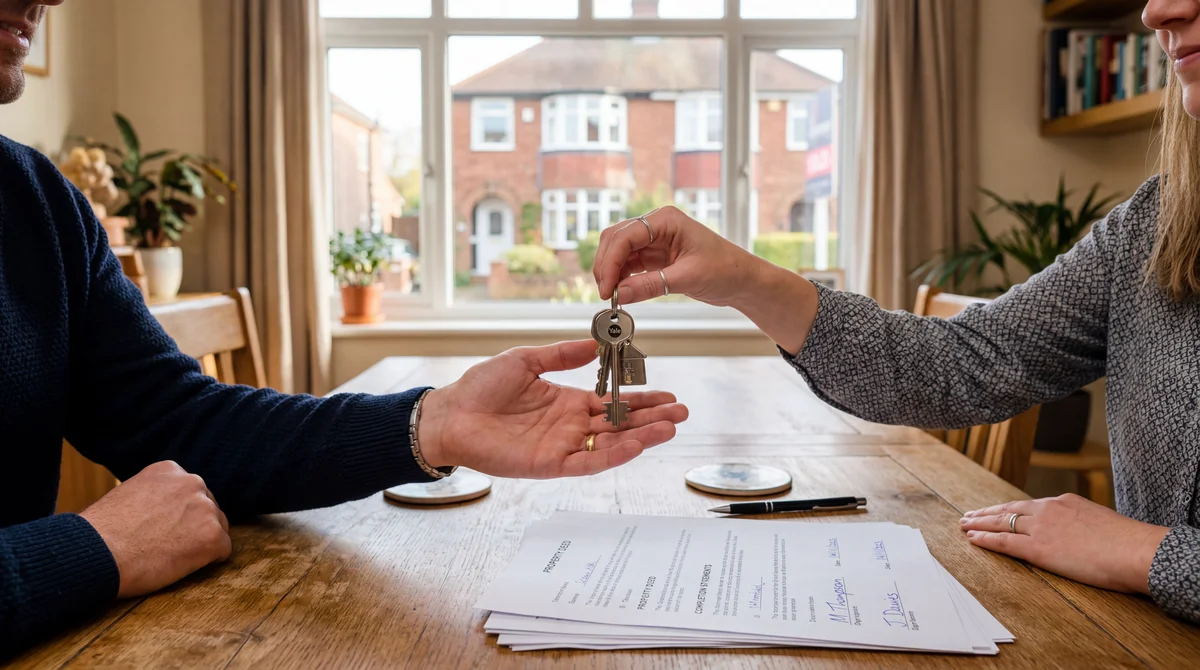
Exchange vs Completion: What's the Difference?
We used to say 'exchange' and 'completion' interchangeably until our solicitor corrected us - they are two very different legal events that happen at different times, and confusing them can lead to costly mistakes. Understanding the difference protects you.
Read article