
Completion Day: What Actually Happens, Hour by Hour
Money moves between solicitors, keys are released when it lands, and almost nothing happens at a time you control
We booked one day off work for completion day. By four in the afternoon we were sitting in a van outside the house, still waiting for a phone call, watching the removals team's patience run out. Nobody had done anything wrong. We had simply assumed that a date in a contract meant a time, and it does not. Here is what actually happens on the day, roughly when, and which parts are outside anyone's control.
The day runs on bank transfers, not appointments
Completion happens when the buyer's solicitor sends the purchase money to the seller's solicitor and that money arrives. Everything else on the day is arranged around that transfer.
The funds usually move by CHAPS, the same-day system UK banks use for property transactions. CHAPS has a cut-off, typically mid-afternoon on working days, and payments are processed in the order they are submitted. If your purchase is part of a chain, the money often has to pass through several firms in sequence: the bottom of the chain pays the next one up, who can then pay the next, and so on. Each transfer takes time to send, arrive and be confirmed.
This is why completion times vary so widely, and why nobody can promise you a time in advance.
- Completion is a moment on the day, not a time you book
- Chains complete in sequence, so a delay low down moves the parties above it
- CHAPS cut-offs mean a very late transfer can push completion to the next working day
A rough shape of the day
Times below are typical rather than promised, and a short chain moves faster than a long one.
Early morning: removals arrive at the property you are leaving, if you are selling, and your solicitor confirms they have what they need to send funds.
Mid-morning: transfers begin moving up the chain, and solicitors confirm receipt as money lands.
Late morning to mid-afternoon: your solicitor receives the funds, confirms completion, and tells the estate agent to release the keys. This is the call the whole chain is waiting for.
After the call: keys are collected, usually from the estate agent's office rather than the property, and removals unload.
Following days: your solicitor deals with the paperwork that follows - paying Stamp Duty Land Tax where it applies, and registering the change of ownership with HM Land Registry.
What tends to go wrong
The common causes of a late or moved completion are mundane rather than dramatic: a long chain, where a delay anywhere below you moves the parties above. Funds released late in the day, close to the CHAPS cut-off. A mortgage lender releasing the advance later than expected. A last-minute issue found on the final searches or a discrepancy in the figures. Or completing on a Friday, the busiest day of the week for the whole system.
Friday is worth understanding rather than avoiding on principle. It is popular because it gives people a weekend to unpack. That popularity is exactly why the banking system is most congested, and why a Friday problem can leave you without keys until Monday.
- A solicitor can usually indicate what time they expect to send and receive funds
- People who have moved often mention having the solicitor's and agent's numbers on a phone rather than in a box
- Removals firms usually charge waiting time after an agreed period - ask what theirs is
Practical things that are easy to forget
Meter readings at both properties, photographed and dated. A bag of what is needed the same night, kept separate from the van. Who is handing over the keys, and from which office. Whether alarm codes, boiler manuals and warranties have been left behind. And what the removals firm does if keys arrive after their cut-off.
Our moving tools guide covers the kit that made the day easier for us, and the maintenance calendar covers what comes after you are in.
Booking time off
One day is enough if the day runs to schedule. Plenty of people describe taking a second day, either side, for the parts that are not the completion itself: unpacking enough to function, waiting for utility connections, or handling anything the previous owner left behind. What works depends on the length of your chain, how far you are moving and how much you are moving - which is exactly the sort of thing a general guide cannot decide for you.
Key takeaways
- 1Completion happens when money arrives, not at a booked time
- 2CHAPS cut-offs and chain length are the two things that most affect when
- 3Keys are usually released by the estate agent once your solicitor confirms funds
- 4Friday is the busiest completion day, which cuts both ways
- 5Meter readings, a same-night bag and phone numbers out of the boxes are the practical basics. Last reviewed August 2026
General information only. This article is for educational purposes and does not constitute legal, financial, surveying or tax advice. Every property purchase is different - always consult a qualified solicitor, mortgage adviser or surveyor before making decisions. Home Ready Guide Limited is not FCA authorised.
Related articles
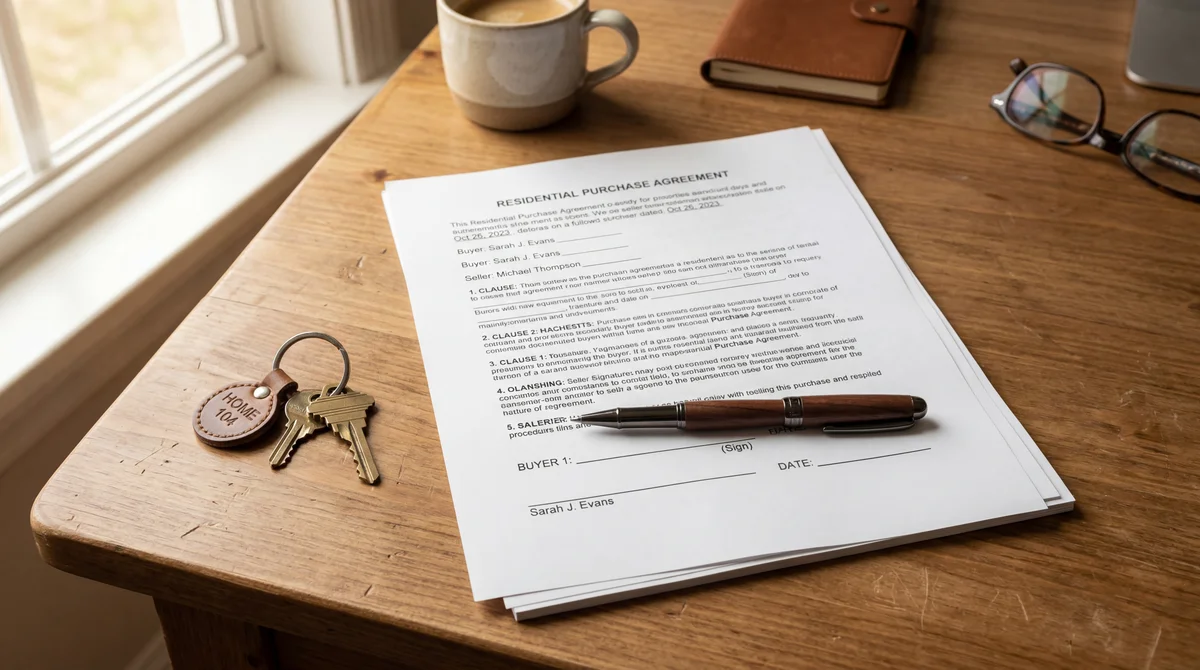
Conveyancing Explained: What Your Solicitor Actually Does
For many buyers, conveyancing is the mysterious thing that 'the solicitor does' for several months in the background. We felt completely in the dark during ours - chasing updates, not understanding what stage we were at, wondering if things were on track. Understanding what's actually happening - and what your role in it is - can reduce that anxiety and help you spot delays before they become problems.
Read article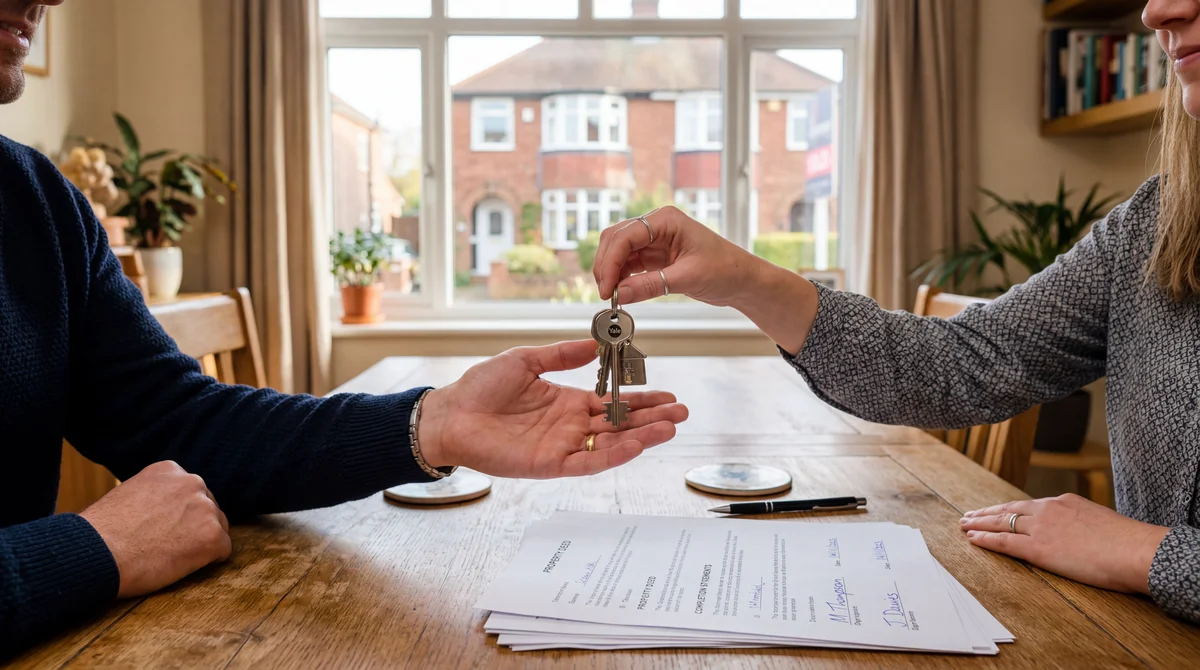
Exchange vs Completion: What's the Difference?
We used to say 'exchange' and 'completion' interchangeably until our solicitor corrected us - they are two very different legal events that happen at different times, and confusing them can lead to costly mistakes. Understanding the difference protects you.
Read article
9 Tools That Made Our Move Easier (and We Still Use Today)
When we moved into our first home, we had a screwdriver and an optimistic attitude. Within a week we'd made three trips to the hardware shop. Most of what we bought turned out to be the wrong thing, the wrong size, or unnecessary. After settling in, we worked out which tools we actually reached for again and again - and which ones made the move itself far less stressful. Here are the nine that made the biggest difference for us.
Read article